
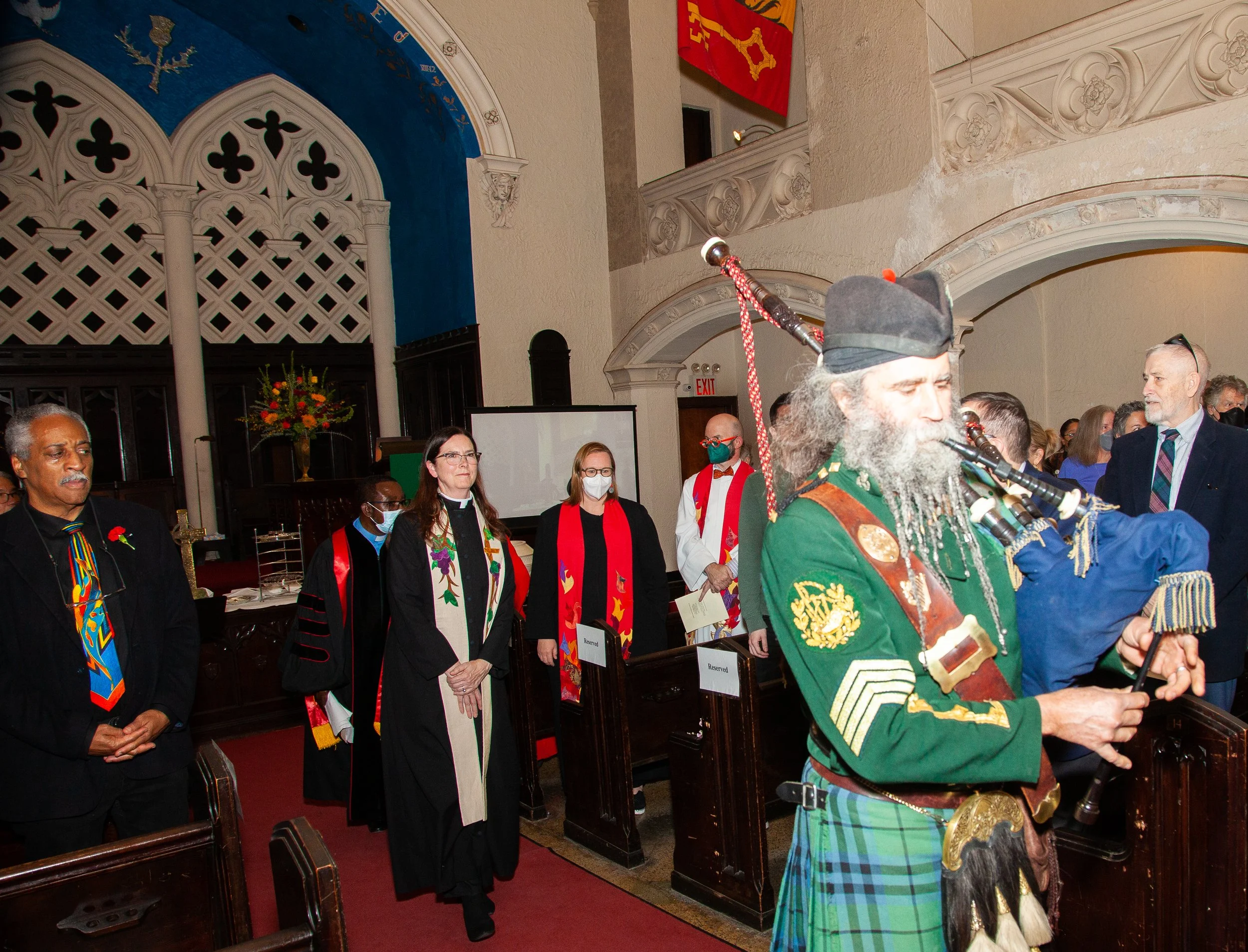
A rich history in New York City
Founded in 1756, when members of New York’s earliest Presbyterian congregation seceded (in part over a disagreement about Psalm tunes), the “the Scotch Church” met initially in members’ homes. Despite fractious beginnings, the church played a significant role in the evolution of the city and the nation.
Its first pastor, the Rev. John Mason, was banished from New York for his anti-royalist publications and served as a chaplain to the Continental Army during the American Revolution. After the war, he returned to the Scotch Church.
“Whosoever shall do the will of my Father, the same is my brother, sister, and mother.” With those words, Rev. Mason welcomed 15 year old Katy Ferguson to the communion table. In 1789, she became the first Black member of the church. When Katie was eighteen, she began New York’s first “Sabbath School” in her home -- not “Sunday School” as we know it today, but a school for poor children who had to work on weekdays.
1789 also marks the year that church elder, Alexander Robertson, donated a house and lots on Pine Street for a coeducational elementary school – the city’s first. The school, which bore his name, continued through many iterations, as a nursery school, girls’ school, and independent elementary school, serving to educate the city's children until 2025.
The church’s second minister, the Rev. John M. Mason, founded the first Presbyterian theological seminary in this country which incorporated into Union Theological Seminary in 1836. Church members were among the founders of such institutions as New York University and Presbyterian Hospital.
As the city spread northward, the congregation moved to locations including Crosby Street and 14th Street, meanwhile merging with the First Reformed Presbyterian Church and Knox Presbyterian Church. In 1917, it changed its name officially to Second Presbyterian Church.
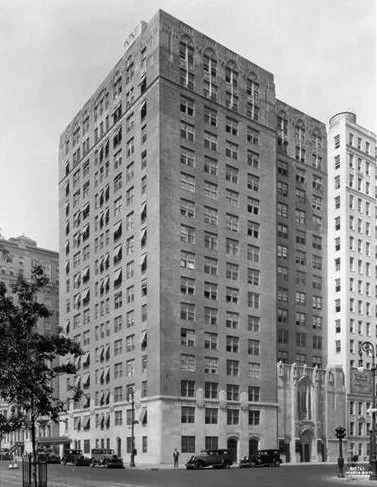
Our Building
Having marched up the island of Manhattan as demographics changed, we built a church and school on the present block at Central Park West and 96th Street, in the early 1890s. Legend has it that subway construction weakened the foundation of the church. In 1928, an agreement was made with a developer for a residential building, designed by Rosario Candela, with a new church (our 6th) and school in its base.
Historic plaques and memorials traveled uptown with us to the present building. A stone plaque from the 1768 building is mounted on the East wall of the narthex, inscribed with the mottos of the congregation, “Hitherto hath the Lord helped,” and of the Church of Scotland, “The bush burned with fire, and the bush was not consumed” (in Hebrew).